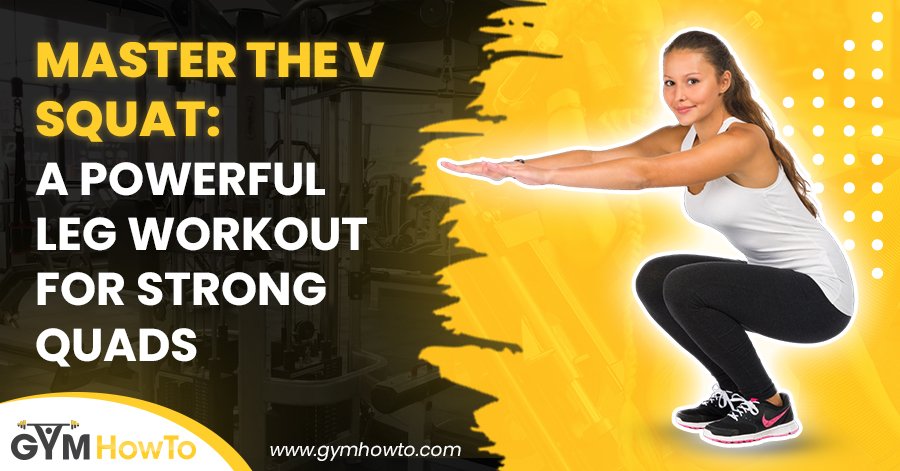
The V squat is a machine-based leg exercise that targets your quads, glutes, and hamstrings with less spinal compression than a barbell back squat. It gets its name from the V-shaped angled footplate you stand on — your heels are together, toes angled outward, and you squat into the machine rather than loading a bar across your back.
It is one of the better quad-isolation tools in any gym, and it's useful for anyone with back issues who still wants to train legs heavy.
- Lower spinal load: The angled V-plate allows a more upright torso, significantly reducing pressure on the lower back compared to barbell squats.
- Quad-dominant: While it hits the entire leg, the V-squat is a premier tool for building quadriceps mass with better knee comfort than a hack squat.
- Form matters: Keep your heels planted and drive through them — letting heels rise shifts the load to the knees and away from the quads.
- Versatile stance: Use a narrow stance for outer quad sweep, or a wide stance (sumo style) to target your inner quads and adductors.
Muscles Worked
| Muscle Group | Role |
|---|---|
| Quadriceps | Primary mover — front of thigh |
| Glutes | Hip extension, especially at the bottom |
| Hamstrings | Stabilization and knee flexion |
| Calves | Ankle stability during the push |
| Core | Stabilization throughout the movement |
Foot placement shifts emphasis:
- Narrow stance: More outer quad (vastus lateralis)
- Wide stance: More inner quad (vastus medialis) and adductors
- Feet high on plate: More hamstring and glute involvement
How to Do the V Squat
- Set up the machine: Load the weight plates and adjust the shoulder pads so your knees are slightly bent when you stand under them.
- Position your feet: Place feet shoulder-width apart on the angled footplate, toes pointed slightly outward.
- Get under the pads: Position the shoulder pads against your traps — not your neck. Grab the handles for balance.
- Release the safety: Take a deep breath, brace your core, and push up slightly to release the safety bar.
- Descend: Push your hips back and bend your knees until your thighs reach parallel (or below if your mobility allows). Inhale on the way down.
- Drive up: Push through your heels and extend your legs powerfully. Exhale on the way up. Keep a slight bend in the knees at the top — do not lock out.
- Reset and repeat: Complete your reps, then re-engage the safety bar before stepping off.
Common form mistakes:
- Letting your heels rise off the plate (reduces quad engagement)
- Caving knees inward (weak glutes — cue: push knees out)
- Partial range of motion — squat deep enough that thighs reach parallel
- Too much weight too soon before you can control the bottom position
Lean forward slightly. Some lifters reverse the machine (face the pad instead of the back) to get a more torso-inclined position, which loads the quads harder and feels more like a front squat.
Push your knees forward on the descent. This increases quad engagement through greater knee flexion — the opposite of what you'd cue for a regular squat.
Footwear matters. Wear flat shoes or lifting shoes, not running shoes with thick soles. Cushioned soles reduce force transfer and create instability under load.
Warm up first. Leg press or bodyweight squats for one to two light sets before loading the V squat machine.
V Squat Without a Machine
Not every gym has a V squat machine. The closest free-weight substitute:
- Stand with your heels on a slightly elevated surface (a 25-lb plate works)
- Hold a kettlebell or dumbbell behind your back with both hands at arm's length
- Feet slightly wider than shoulder-width, toes out
- Squat down until thighs reach parallel, keeping your chest up
- Drive through your heels to stand
This replicates the angled foot position and upright torso of the machine version. It's significantly harder to stabilize, so use less weight than you think you need.
V Squat vs Hack Squat
| Factor | V Squat | Hack Squat |
|---|---|---|
| Primary target | Quads, glutes | Quads (more isolated) |
| Torso angle | More upright | More reclined |
| Knee feel | Comfortable for most | Can bother knees |
| Hip accommodation | Adjustable foot position | Fixed sled path |
| Best for | High reps, full leg development | Quad isolation, advanced lifters |
If your goal is pure quad isolation, the hack squat delivers a slightly more direct stimulus. If you want an all-around leg machine that feels better on your knees over high rep ranges, the V squat wins. Most lifters use both — they complement each other well.
Alternatives if You Don't Have the Machine
Leg press — The closest substitute in most gyms. The mechanics are similar (feet on a platform, pushing load away from you) but the sled path is fixed. Still highly effective for quads and glutes.
Barbell front squat — Upright torso position like the V squat, but far more demanding on mobility and upper body stability. Better for experienced lifters.
Bulgarian split squat — Rear foot elevated, front leg does the work. Great quad and glute emphasis with no machine required.
Goblet squat — Hold a dumbbell or kettlebell at chest height. The counterbalance naturally promotes an upright torso. Good beginner alternative.
Pendulum squat — If your gym has one, it's the closest machine equivalent to the V squat, with a slightly different arc of motion.
Best V Squat Machines
If you want to add a V squat machine to a home gym or commercial setup, here are three worth considering:
- Check Price on Amazon: Valor Fitness Smith Machine
- Check Price on Amazon: Titan Fitness Leverage Squat
- Check Price on Amazon: Titan Fitness Linear Leg Press
V squat machines typically cost $1,000–$5,000 depending on the brand and build quality. They require significant floor space and are impractical for most home setups. The leg press or hack squat machine is a more common and cost-effective alternative.
The Bottom Line
The V squat is one of the better quad development tools available — more comfortable on the knees than the hack squat, and safer on the lower back than heavy barbell squats. If your gym has one, it belongs in your leg day rotation.
If you're working with limited equipment, the Bulgarian split squat and goblet squat cover similar movement patterns without any machine at all. See the guides hub for more exercise breakdowns.