
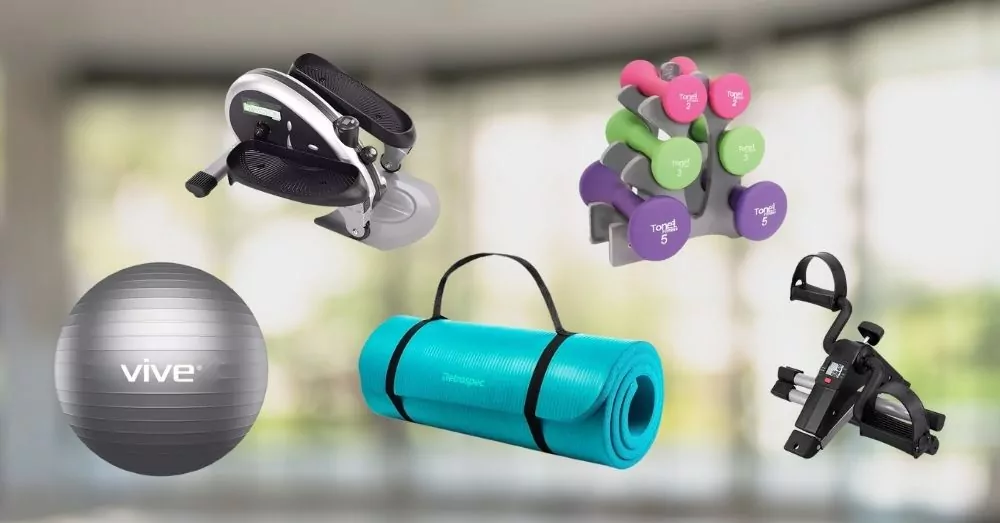
The average office worker sits for 10+ hours a day. Research links prolonged sitting to increased risk of cardiovascular disease, metabolic dysfunction, and musculoskeletal problems — even in people who exercise regularly outside work. Office fitness equipment addresses this by letting you move during the workday, not just around it.
Does Office Exercise Equipment Actually Work?
For focus-intensive tasks: low-intensity equipment only. A slow pedal on an under-desk bike doesn't impair cognitive performance and meaningfully increases your daily calorie burn and circulation. High-intensity exercise (fast walking on a treadmill desk, for example) does hurt concentration for knowledge workers.
The rule: If you're on calls, doing admin, or doing low-focus tasks — more movement is fine. If you're writing, coding, or in deep focus — stick to standing or a slow pedal.
Types of Office Fitness Equipment
Under-Desk Pedal Exercisers
The most accessible entry point. A small pedal unit sits under your desk; you pedal while seated. They're quiet, cheap ($30–$80), and fold away easily. Great for email time, meetings, and calls.
Who it's for: Anyone who wants a low-commitment, low-cost way to add movement to their day.
Under-Desk Ellipticals
Similar to pedal exercisers but with a more natural elliptical motion. Quieter, smoother, and better for longer sessions. Usually $150–$300.
Desk Bikes (Seat + Pedals)
A full seated bike replaces your office chair. You pedal throughout the day. Better calorie burn than a pedal unit but bulkier and more expensive ($300–$800).
Best use case: Home offices where aesthetics and space are less constrained.
Treadmill Desks
A treadmill paired with a standing desk. The gold standard for active office work. You walk slowly (1–2 mph) while working. Significant calorie burn, improved mood and energy. The main barriers: cost ($800–$2,000+), noise, and space.
Balance/Wobble Boards and Active Seating
Standing on a balance board or sitting on a balance ball engages your core passively. Low cost, zero noise, works at any standing desk. The effect is modest but cumulative over a full day.
Wrist and Grip Tools
Stress balls, grip strengtheners, and hand exercisers can be used during calls and low-focus periods. They won't replace exercise but add a tiny bit of active time throughout the day.
What to Look for When Buying
Noise level. If you're in an open office or on regular video calls, you need a quiet unit. Under-desk ellipticals and pedal exercisers vary a lot here — check review videos before buying.
Height clearance. Measure the space under your desk before ordering. Most pedal units need at least 28 inches of clearance.
Resistance range. Higher resistance = more effort = more noise. Look for a model with a good low-resistance setting you can use without distraction.
Portability. If you want to move between rooms or take it on the road, folding/lightweight units are worth the premium.
Building a Productive Active Office Setup
A practical office fitness setup doesn't need to be expensive:
- Start with a pedal exerciser (~$50) — lowest barrier to entry, immediate value
- Add a standing desk converter (~$150–$300) — alternating sitting and standing reduces fatigue
- Consider a balance board (~$40) for standing periods
- Upgrade to a treadmill desk if you work from home and want the highest impact
The goal isn't to turn your office into a gym — it's to interrupt prolonged sitting and add cumulative movement throughout the day.
Our Full Office Fitness Reviews
Start with our comprehensive guide to the best exercise equipment for the office — covering 15 products organized by benefit (core/posture, circulation, and muscle toning). Detailed, honest reviews below.