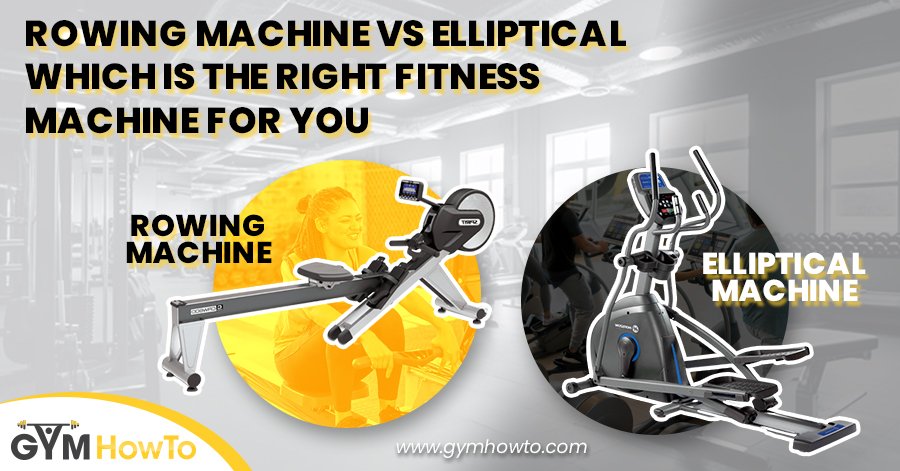
Short answer: A rowing machine gives you a harder, more complete workout — it hits 86% of your muscles per stroke. An elliptical is easier on your joints and simpler to learn. For weight loss, both burn roughly the same calories per hour. Pick the one you'll actually use consistently.
- Rowing machines engage 86% of your muscles per stroke — legs, core, back, and arms.
- Ellipticals offer true zero-impact cardio — the best choice for bad knees, hips, or ankles.
- Calorie burn is similar (250–330 per 30 mins) — what matters is which machine you'll actually use 4–5 times per week.
- Space and cost: Rowers are generally cheaper and store vertically, making them better for small home gyms.
Here's how they compare across every factor that matters for your home gym.
Rowing Machine vs Elliptical: Head-to-Head Comparison
| Factor | Rowing Machine | Elliptical |
|---|---|---|
| Calories burned (30 min, moderate effort) | 250–300 cal | 270–330 cal |
| Muscles worked | 86% of body (legs, core, back, arms) | Primarily lower body; upper body optional |
| Joint impact | Low (but knees flex deeply at the catch) | Very low — zero impact |
| Learning curve | Moderate — technique matters | Easy — step on and go |
| Noise level | Quiet (magnetic) to moderate (air/water) | Generally quiet |
| Footprint | ~8 ft × 2 ft; stores vertically | ~6 ft × 2.5 ft; doesn't fold |
| Entry price (decent quality) | $200–$400 | $400–$700 |
| Premium option | Concept2 Model D (~$990) | NordicTrack FS10i (~$1,300) |
| Best for | Full-body training, HIIT, space-limited gyms | Bad knees, beginners, longer steady-state cardio |
Rowing Machine: What You Need to Know
A rowing machine (rower or ergometer) simulates the motion of rowing a boat. Each stroke follows a four-phase cycle: the catch, the drive, the finish, and the recovery. It's one of the few cardio machines that genuinely works your entire body in a single movement.
Muscles worked
Every rowing stroke engages your quads, hamstrings, glutes, core, lats, rhomboids, rear delts, biceps, and forearms — often cited as roughly 86% of your total muscle mass (based on muscle group activation studies comparing cardio modalities). The legs do about 60% of the work, the core handles 20%, and the upper body finishes the remaining 20%.
This matters for calorie burn. More muscles working means a higher metabolic demand, which is why rowing can feel more intense even at moderate effort.
Resistance types
- Air resistance (Concept2, Rogue Echo) — feels closest to real rowing. Resistance increases as you pull harder. Louder than magnetic.
- Water resistance (WaterRower) — smooth, natural feel with a satisfying swoosh. Mid-range noise.
- Magnetic resistance (Sunny Health) — near-silent, great for apartments. Resistance doesn't vary with pull speed, which feels less natural.
Pros
-
Full-body workout in every stroke
-
High calorie burn per minute
-
Compact storage — most rowers stand upright against a wall
-
Lower price of entry than ellipticals
-
Excellent for HIIT intervals (alternate 30 seconds hard / 30 seconds easy)
Cons
-
Technique matters — poor form reduces effectiveness and can cause lower back strain
-
Deep knee bend at the catch can bother people with certain knee conditions
-
Can feel monotonous if you're not following a structured program
-
Takes 3–5 sessions to develop comfortable form
Elliptical Trainer: What You Need to Know
An elliptical creates a smooth, gliding motion that blends walking, running, and stair-climbing without your feet ever leaving the pedals. The zero-impact design is why physical therapists frequently recommend ellipticals for rehab and for people with joint issues.
Muscles worked
Ellipticals primarily target the quads, hamstrings, glutes, and calves. If your machine has moving arm handles, you'll also engage your chest, back, and arms — but the upper-body involvement is light compared to rowing unless you deliberately push and pull the handles.
Pedaling in reverse shifts emphasis to the hamstrings and glutes, which adds some variety.
Resistance and incline
Most ellipticals offer magnetic resistance (10–25 levels). Higher-end models also have adjustable incline (stride elevation), which changes the muscle emphasis:
- Low incline — more quad-focused, feels like walking
- High incline — shifts to glutes and hamstrings, feels like stair climbing
Pros
-
True zero-impact — ideal for bad knees, hips, or ankles
-
Intuitive — no learning curve at all
-
Perceived exertion is lower than actual exertion (you burn more than you think)
-
Many preset programs for variety (intervals, hills, endurance)
-
Reverse pedaling adds exercise variety
Cons
-
Larger footprint and heavier — hard to move or store
-
Higher entry price for a quality machine
-
Upper-body engagement is minimal unless you actively use the handles
-
Weight-bearing is reduced, which means less bone density benefit than running or walking
-
Cheaper models can feel wobbly and unnatural
How to Choose: Rowing Machine or Elliptical?
The right machine depends on your specific situation. Here are clear recommendations:
Choose a rowing machine if:
- You want the most complete full-body workout from a single machine
- You're training for HIIT or interval-style cardio
- Space is limited — rowers store vertically and have a smaller footprint
- You're on a tighter budget — a quality rower costs less than a quality elliptical
- You don't have knee issues that would make deep flexion painful
Choose an elliptical if:
- You have bad knees, hips, or joint problems — the zero-impact motion is unmatched
- You're a complete beginner who wants something you can use effectively on day one
- You prefer longer, steady-state cardio sessions (45–60+ minutes)
- You want a machine that feels easier while still burning significant calories
- You plan to watch TV, read, or multitask while exercising
For weight loss specifically
Both machines burn roughly 250–330 calories per 30-minute session at moderate intensity. The calorie comparison is closer than most people expect — and the difference is negligible over the long term. What the table doesn't show: rowing feels harder at equivalent output, which means most people work at a lower perceived effort on an elliptical and naturally sustain longer sessions. Those longer sessions offset the per-minute calorie gap. What matters more:
- Which one will you actually use 4–5 times per week? That's your answer.
- Rowing may have a slight edge post-workout — the higher muscle engagement creates a larger "afterburn" (excess post-exercise oxygen consumption, or EPOC).
- Ellipticals let you sustain longer sessions more comfortably, which can offset any per-minute difference.
For a home gym on a budget
A rowing machine is usually the smarter buy. The Concept2 Model D (~$990) is the gold standard and holds resale value better than any other piece of fitness equipment. Budget magnetic rowers from Sunny Health or Fitness Reality start around $200 and are serviceable for beginners.
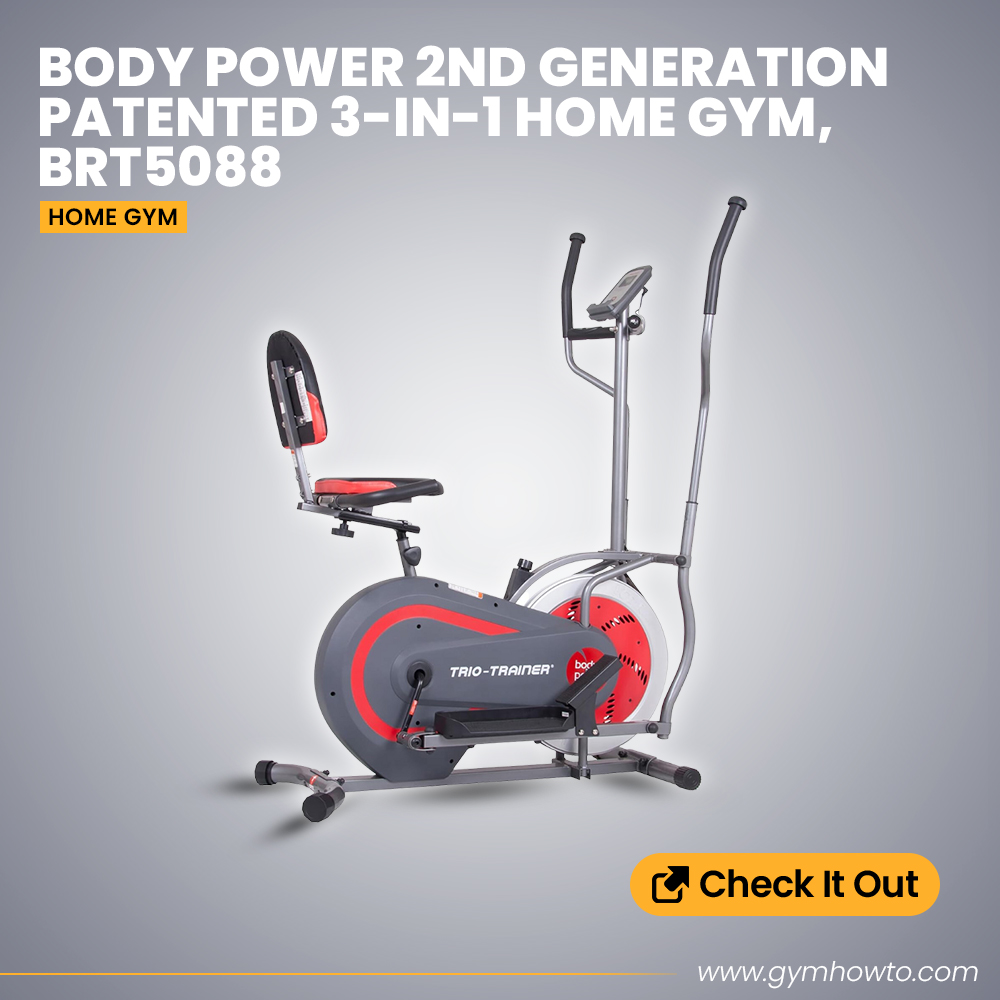
Ellipticals under $500 tend to feel cheap — wobbly pedals, short stride length, and noisy operation. You generally need to spend $700+ for an elliptical that feels solid. If you're considering an elliptical bike combo that doubles as a stationary bike, that can stretch the value.
The Bottom Line
A rowing machine gives you more workout per minute. An elliptical gives you more comfort per minute. Neither is objectively "better" — they serve different needs.
If you're healthy, motivated, and willing to learn proper form, a rower will reward you with efficient full-body training. If you need something gentle, intuitive, and easy to stick with, an elliptical is the safer choice.
The worst decision is buying either one and letting it collect dust. Pick the machine that matches how you actually want to exercise — not the one that sounds more impressive.